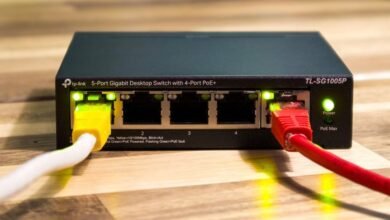
The Fusion Node 980748051 Cyber Beam functions as a high-precision conduit for data and neural interfacing within a fusion-node framework. It enacts deterministic signaling while filtering noise to preserve channel integrity. The system coordinates spectral alignment and strict latency budgets to maintain stable cognitive throughput, with continuous drift monitoring. Real-time performance assessment enables synchronized pathways across hybrid fiber-wireless networks, raising questions about resilience and security that invite closer examination. This warrants further exploration into its operational boundaries and integration requirements.
Fusion Node 980748051 Cyber Beam
The Fusion Node 980748051 Cyber Beam operates as a high-precision data conduit and neural interface module within the larger fusion-node architecture. It enacts deterministic signaling, filtering noise and preserving integrity across channels.
In this context, the fusion node coordinates spectral alignment and latency budgets, enabling stable cognitive throughput. Cyber beam pathways are monitored for drift, ensuring consistent performance. continuous assessment.
How the Hybrid Fiber-Wireless Architecture Speeds Data Transfer
A hybrid fiber-wireless architecture accelerates data transfer by combining high-capacity optical channels with flexible radio links, enabling rapid fallback and load-balancing across networks.
The approach increases throughput by parallelizing traffic paths while preserving low latency, reducing congestion bottlenecks.
It enhances network reliability and spectrum efficiency, enabling adaptive resource allocation, interference suppression, and seamless carrier handoffs without sacrificing performance or user autonomy.
Security-First Design and Self-Healing Firmware in Action
Security-first design underpins the firmware architecture, embedding cryptographic resilience, integrity checks, and formal verification into every update cycle.
The implementation demonstrates layered defense with immutable logging, peer attestation, and rapid rollback.
Self healing operates through autonomous anomaly detection, secure firmware recovery, and redundant verification paths.
Security first prioritizes resilience while enabling transparent, freedom-promoting experimentation and continuous secure evolution.
Real-World Use Cases: From Smart Homes to Industrial Grids
Real-world deployment demonstrates how the Fusion Node 980748051 Cyber Beam framework scales from residential environments to complex industrial ecosystems, leveraging modular firmware, secure attestation, and autonomous recovery across heterogeneous devices.
The approach highlights practical use cases in smart homes and grids, addressing privacy gaps while balancing performance.
This reveals resilient architectures and measurable latency bounce under diverse operational conditions.
Conclusion
The Fusion Node 980748051 Cyber Beam integrates precise signaling with noise filtration to sustain deterministic throughput across hybrid networks. Its spectral alignment and latency governance ensure resilient, low-latency pathways, while real-time drift monitoring maintains stability in diverse environments. Security-first design and self-healing firmware reduce risk and downtime. In operation, data flows resemble a finely tuned lattice—strong yet flexible—like a violin string under controlled tension, delivering reliable performance across smart homes and industrial grids.